
Draw Schedule Sucess- What every home owner needs to know
Every contractor knows that the key to a successful contract is a well thought out draw schedule. A draw schedule should accomplish several important things. First the draw schedule outlines how the contractor will get paid from the home owner. Next the draw schedule allows for earnest money at the contract signing. The draw schedule keeps the project moving and helps maintain checks and balances when it comes to the distribution of your hard earned project funds.
A draw schedule could have as few as two draws on a small project or as many as eight draws on a larger project. The contractors focus is to get the project to fund itself so he does not have to come out of pocket and carry the costs. You will notice this when you look at the draws requests and when they are due in the contract. You as the home owner have every right to ask the contractor to explain the flow of work and the draw schedule. Contractors will front load the draw schedule if you are requiring them to make major purchases such as appliances or expensive plumbing fixtures. If a draw schedule looks out of line, do not sign the contract until you consult a second source to make sure you don’t over pay for the completed work.
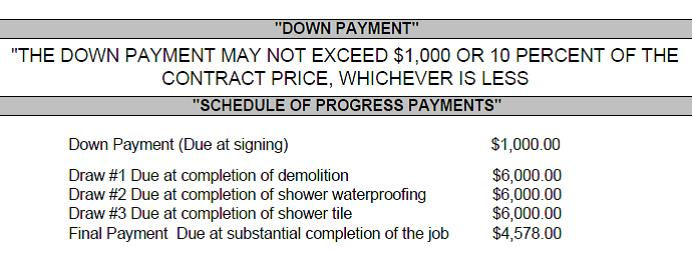
Sample draw schedule on a $23,578.00 bath remodel contract
The very first line in the draw schedule will always be the deposit. This is the down money the home owner pays to lock down the contractor. I never give a home owner a start date without earnest money. Contractor are running a business and they need to fill their calendar with "Real" projects and the deposit makes the job real. In California, a licensed contractor is only allowed to ask for a deposit of $1000 or 10% of the project total, whichever is less. This California contract requirement was put in place to protect the home owner from contractors that take large deposits and disappear. Because the deposit money limit is so low, be prepared to pay a draw payment as soon as demolition is completed. In most cases, the demolition draw should be no more than 20% of the contract.
The most important reason to require a draw schedule in your contract is it keeps everyone honest. And if someone is not, it allows for a stopping or breaking point. A well thought out draw schedule becomes real once both parties sign the contract and the “Three Day Right to Rescind” passes. Now everything is above board and the contractor knows when to ask for money and the home owner knows when to expect to pay. Remember you agreed to this schedule when you signed the contract so be prepared to pay if the work is done. If you don’t, the contractor can stop work until you do. Also be prepared for a contractor to ask for money early. Paying a contractor early is your choice but I look at it this way, you had an agreement the contractor should honor that. If the contractor has a good reason to ask for an early draw ask yourself these questions, if I pay him and he never returns, does the amount of his completed work equal the amount you’ve paid to date? Another question to ask yourself is has the contractor cleaned up the job site? If things go poorly you don’t want to be left with a mess.
I never write a contract for a project over $1000 without including a draw schedule. I recommend you as a home owner do the same. Outline the payment schedule expectations before you break ground.
*Chris Gallo is the qualifying partner for Platinum Construction DBR. He has been licensed as a general contractor in the state of California for 25 years and his company services all of So. California. You can contact him with questions at cgallo@PlatinumDBR.com


Comments